Amajimbos coach Vela Khumalo hails Kaizer Chiefs forward Shaun Els as a “rare breed” after his standout performances at the 2025 FIFA U-17 World Cup in Qatar — but insists South Africa must protect and nurture the teenage sensation carefully.
A Rising Star Shines on the Global Stage
The world’s attention has turned to Qatar for the 2025 FIFA Under-17 World Cup, and among the brightest young talents making headlines is Shaun Els, the 17-year-old striker from Kaizer Chiefs’ youth academy.
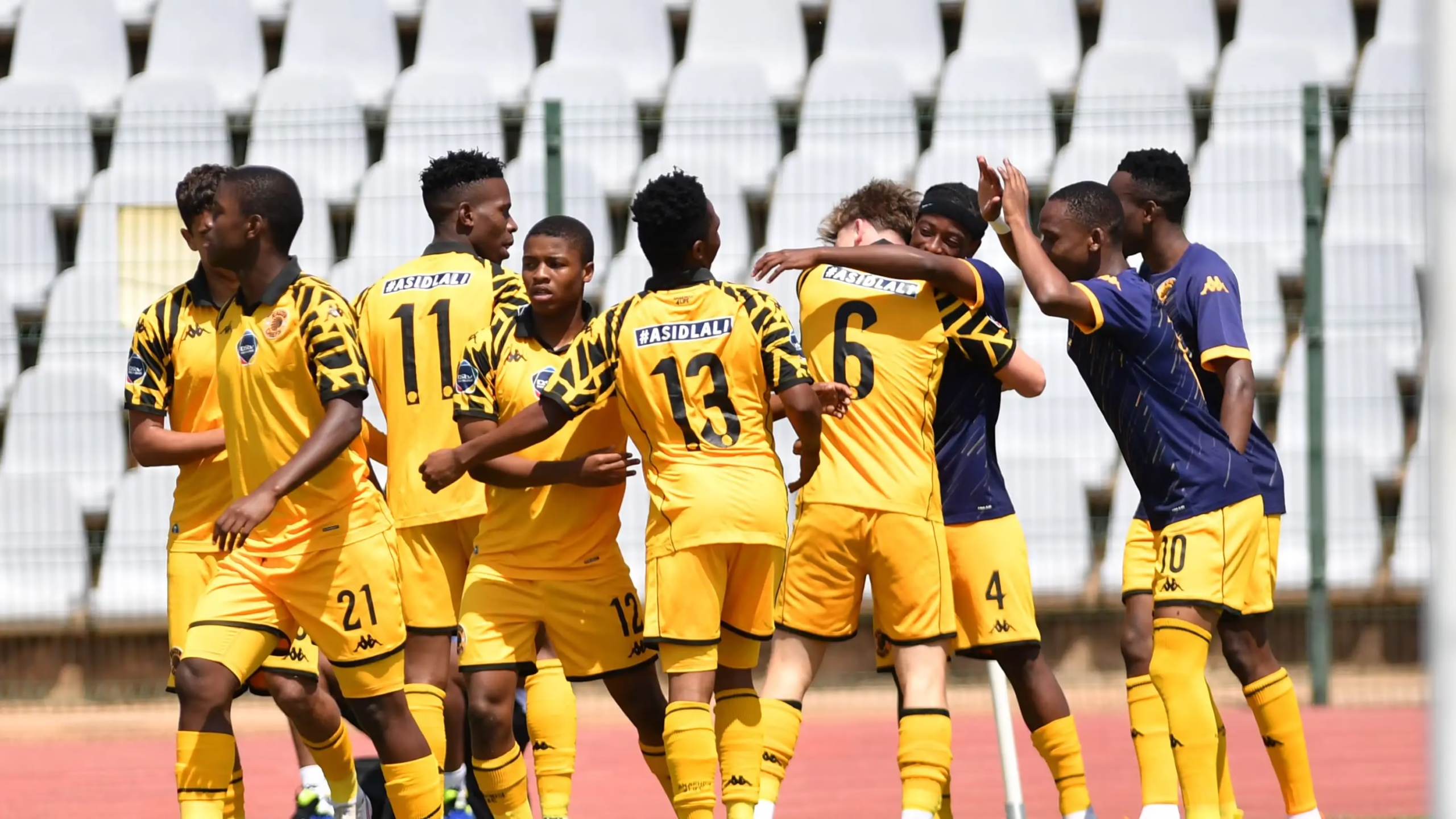
Els’ composure, instinct, and eye for goal have not only elevated Amajimbos—South Africa’s U-17 national team—but also reignited hope in the future of South African striking talent. With two goals in three matches, including a well-taken finish against Bolivia and a powerful strike versus Italy, Els has quickly become a name on the lips of football fans and scouts alike.
Under the guidance of head coach Vela Khumalo, the Amajimbos have reached the Round of 32 for the first time in history, marking a milestone moment for South African youth football.
Amajimbos’ Historic Journey in Qatar
Drawn in Group A alongside hosts Qatar, Italy, and Bolivia, South Africa entered the tournament as underdogs but quickly captured attention with their fearless attacking style.
Their campaign began on a high with a 3-1 victory over Bolivia, where Els and his teammate Neo Bohloko both found the back of the net. The win gave the young South Africans an early confidence boost in a group brimming with technical and physical opposition.
In their second match, Amajimbos played to a 1-1 draw against Qatar, showing tactical maturity and discipline, before falling 3-1 to Italy in their final group game. Despite the defeat, their earlier results secured second place in the group with four points from three matches, ensuring safe passage to the knockout stages — a first for the nation at this level.
Shaun Els: The Prodigy From Naturena
For followers of Kaizer Chiefs’ DStv Diski Challenge (DDC) side, Shaun Els’ performances in Qatar come as no surprise. The precocious forward has long been regarded as one of the most promising attacking talents to emerge from Naturena’s youth setup in recent years.
Under Khumalo’s tutelage at Chiefs’ academy, Els has demonstrated a rare blend of technical precision, spatial awareness, and confidence in front of goal — qualities that have seen him draw comparisons to South Africa’s legendary strikers.
“I think I indicated this earlier when I introduced him at DDC. In his introduction at DDC with Kaizer Chiefs, he scored a goal,” said Khumalo in an exclusive interview with FARPost.
“I said it before, and I’m still saying it now: in the country, we are running short of strikers, and if we get a striker like this, who shows glimpses of becoming better and a good goal contributor for the country, we need to take good care of him and nurture him.”
Els’ emergence is a breath of fresh air for a nation that has struggled in recent years to produce prolific forwards capable of performing on the international stage.
“He Is the Real Deal”: Khumalo’s Verdict

Khumalo, who has been instrumental in grooming some of South Africa’s most exciting young players, did not mince his words when describing Els’ potential. The 17-year-old’s instinctive movement, finishing ability, and football intelligence have convinced Khumalo that South Africa has unearthed a special talent.
“This is similar to when we had Benni McCarthy and Phil Masinga; this is where you can say it’s rare to find a striker like this. He needs to be protected,” Khumalo said.
“If we don’t take care of him, then I don’t know what we will be doing, but he is the real deal.”
The comparison to McCarthy and Masinga — two of the greatest strikers in South African football history — is not made lightly. For Khumalo, Els represents the kind of pure attacking instinct that has been missing from the national setup for years.
Balancing Praise with Protection
While Els’ performances have sparked excitement, Khumalo was quick to temper expectations. He believes the key to unlocking Els’ full potential lies in managing his development carefully, shielding him from excessive pressure, and ensuring he continues to grow both technically and mentally.
The spotlight can be overwhelming for young players, especially those representing major clubs like Kaizer Chiefs. History has shown that premature hype can derail promising careers if not handled properly.
Khumalo’s message is clear: patience and protection are paramount.
“He needs to be protected,” he emphasized. “We must nurture him and allow him to grow into the player he’s destined to be.”
This approach echoes a growing trend in modern football, where elite academies focus not only on technical skill but also on the emotional resilience of young athletes navigating fame and expectation.
The Chiefs Connection: A Golden Generation Emerging
Shaun Els is not alone in representing Amakhosi at the World Cup. The Amajimbos squad features several Kaizer Chiefs youth prospects, including Teboho Mlangeni, Keabestwe Morake, Lebohang Dhlamini, and Neo Bohloko, who also scored in the 3-1 win over Bolivia.
This cluster of Chiefs players underlines the success of the club’s academy in developing competitive youth talent capable of thriving on the international stage.
It also signals a potential new era for the Soweto giants, who have been striving to rebuild their squad from within. The performances of these youngsters provide hope that Kaizer Chiefs’ future could be built around homegrown players with international pedigree.
Amajimbos’ Tactical Identity Under Khumalo
Khumalo’s Amajimbos have earned plaudits not just for their results, but for their bold style of play. The team’s approach blends South African flair with modern tactical discipline, showcasing an ability to adapt against diverse opponents.
Against Bolivia, Amajimbos pressed high and attacked in waves, using pace and creativity in wide areas. Against Qatar, they displayed composure and balance, demonstrating maturity beyond their years. Even in the loss to Italy, the side showed moments of brilliance — with Els’ goal epitomizing South Africa’s attacking intent.
The coach’s philosophy is rooted in developing players who can think critically, execute under pressure, and maintain technical precision — a philosophy that aligns with his long-term goal of strengthening the senior national pipeline.
Hugo Broos Explains Why Shandre Campbell’s Time with Bafana Bafana Must Wait
Looking Ahead: Amajimbos vs Japan
Having made history by advancing to the Round of 32, Amajimbos now face Japan in what promises to be a thrilling knockout clash. The match is scheduled for Saturday, 15 November 2025, at the Aspire Zone – Pitch 3, with kickoff set for 15:30 South African time.
Japan’s U-17 side is known for their speed, tactical discipline, and sharp movement — a style that will test South Africa’s defensive organization and mental resilience.
For Khumalo and his players, this encounter is more than just another game; it’s an opportunity to continue proving that South African youth football belongs on the global stage.
The Future of South African Striking Talent
South Africa’s struggle to produce top-quality strikers over the past two decades has been well-documented. From the glory days of Benni McCarthy, Shaun Bartlett, and Phil Masinga, to a generation that has often relied on midfielders for goals, the pipeline has thinned considerably.
In this context, Els’ emergence feels significant. His natural finishing ability, combined with his tactical maturity, gives hope that the country might once again produce forwards capable of performing in top international leagues.
Khumalo’s insistence on protection and patient development highlights the importance of avoiding burnout — ensuring Els’ journey is steady and sustainable rather than rushed for short-term gain.
Building a Pathway From Youth to Senior Football
For South Africa to benefit fully from talents like Els, the transition from youth level to professional football must be seamless. Many promising players fade after youth tournaments due to limited opportunities or poor career management.
Kaizer Chiefs’ responsibility now extends beyond nurturing Els within their youth ranks — they must integrate him into a professional environment that challenges him appropriately while maintaining his confidence.
With continued mentorship from Khumalo and structured development under the Chiefs’ technical staff, Els could very well become a central figure in both club and national football within the next few years.
Conclusion: A Bright Star, A Clear Warning
Shaun Els’ performances at the 2025 FIFA U-17 World Cup have reminded South Africans of what the nation is capable of producing — pure footballing talent with natural instinct and flair.
But as coach Vela Khumalo wisely cautions, such brilliance must be protected, not exploited. The path from prodigy to professional is fraught with challenges, and careful management will determine whether Els becomes the next McCarthy or just another “what could have been.”
About the Author