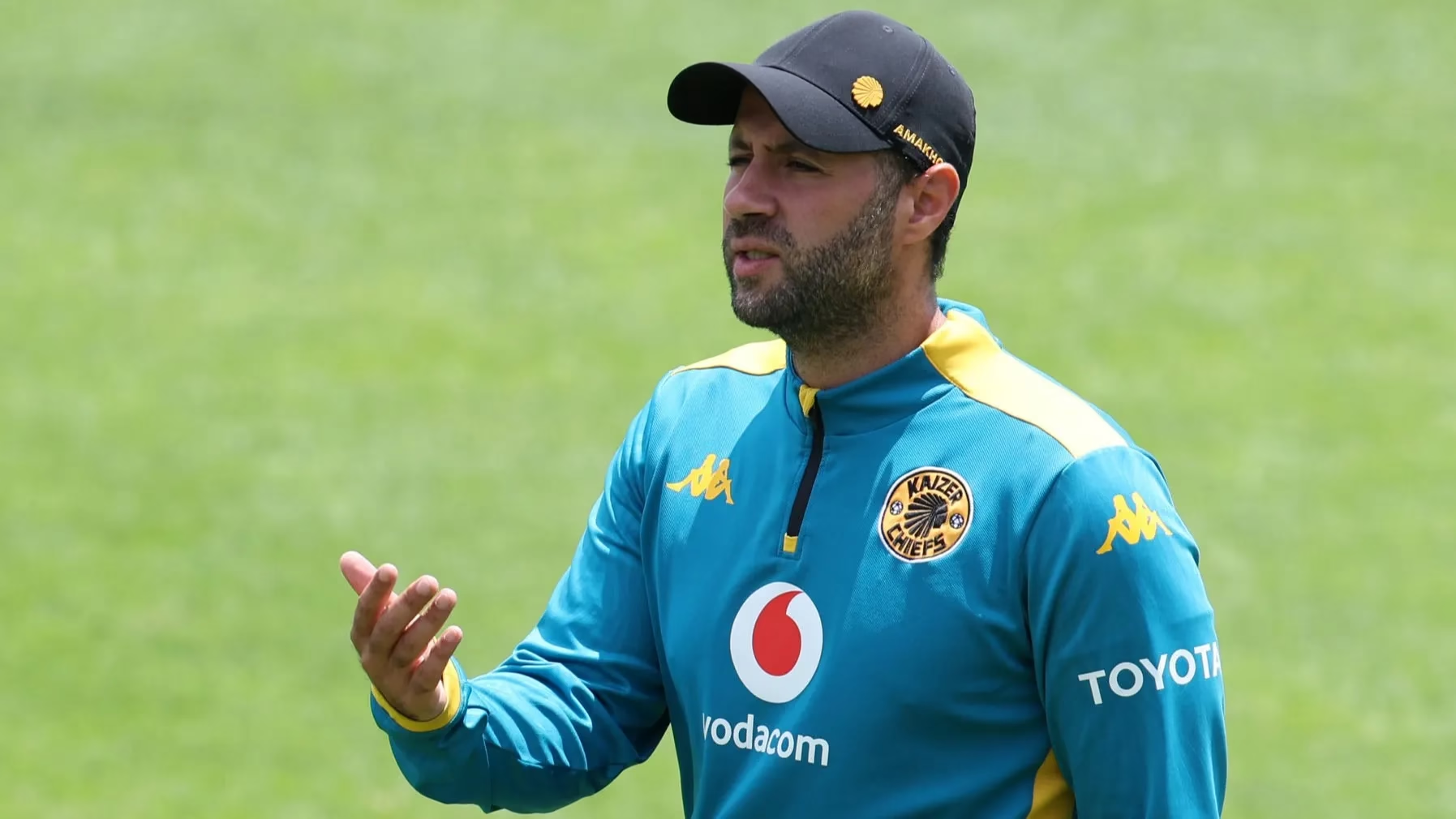
As Kaizer Chiefs embark on their maiden CAF Confederation Cup group-stage journey, co-coach Khalil Ben Youssef’s North African roots could prove to be the club’s most valuable weapon in navigating Egypt’s football giants.
For years, Kaizer Chiefs have been among South Africa’s most decorated football clubs, but their journey on the continental stage has often been defined by near misses and lessons learned. Now, as they prepare to make their CAF Confederation Cup group-stage debut, the Glamour Boys find themselves at the dawn of a new challenge — one that demands tactical maturity, adaptability, and composure in some of Africa’s most demanding football environments.
The Soweto giants will begin their campaign against Al Masry in the historic seaport city of Suez on November 23, before returning home to host Zamalek, another Egyptian powerhouse, in their second Group D encounter.
For Amakhosi, these opening fixtures represent more than just two matches — they’re an opportunity to signal intent and prove that South African clubs can compete with the tactical depth and intensity of North Africa’s finest. And leading this mission from the technical area is none other than Khalil Ben Youssef, a man whose knowledge of North African football could make all the difference.
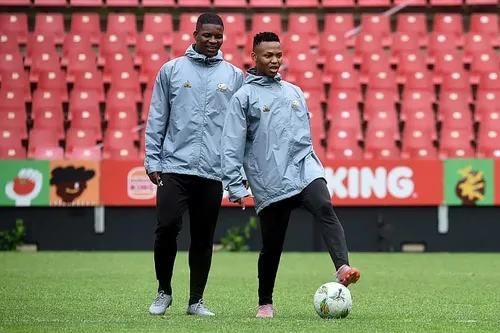
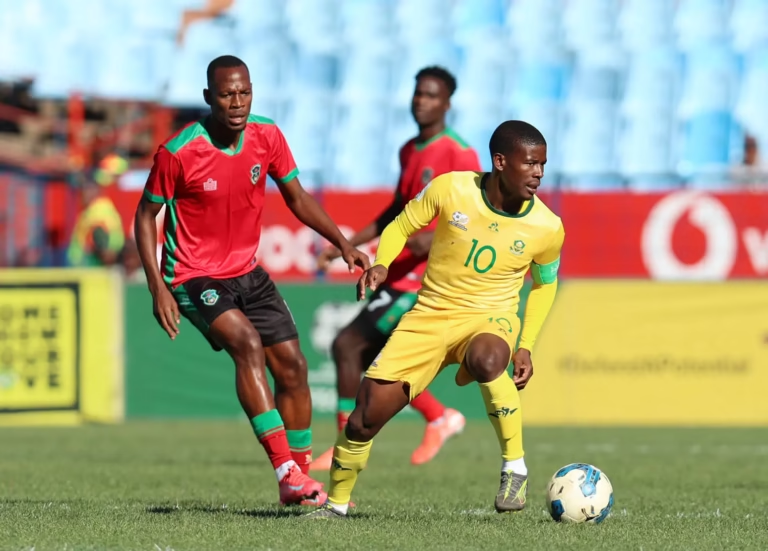
Hugo Broos Explains Why Shandre Campbell’s Time with Bafana Bafana Must Wait
Khalil Ben Youssef: The Right Man for the Job
When Kaizer Chiefs announced Khalil Ben Youssef as part of their technical team earlier this year, it raised eyebrows across the Premier Soccer League. The Tunisian coach’s appointment was seen as a calculated move — not just to inject new tactical ideas, but also to deepen Chiefs’ continental experience.
Now, with the Confederation Cup campaign underway, Ben Youssef will step into the driver’s seat, leading the team from the touchline and overseeing preparations for their crucial fixtures in Egypt.
Ben Youssef’s extensive experience in North African and Middle Eastern football provides Chiefs with a unique advantage. Having worked in regions renowned for their tactical sophistication, defensive organization, and competitive mentality, he understands the nuances required to face clubs like Al Masry and Zamalek — both known for their physical intensity and strategic discipline.
North African Roots: A Tactical Edge

What makes Ben Youssef particularly well-suited for this assignment is his deep understanding of North African football culture. Born and raised in Tunisia, he has spent much of his professional life immersed in the football philosophies that dominate the region — a blend of tactical precision, mental toughness, and a relentless pursuit of results.
This familiarity could be the difference-maker as Chiefs navigate back-to-back fixtures against Egyptian opposition — arguably the toughest environment in African club football.
The Al Masry Challenge: A Battle of Minds
Chiefs’ first test in Group D will be away to Al Masry, a side with a rich history and passionate fan base. The match will take place in Suez, a city with a fierce footballing tradition and a venue known for its intimidating atmosphere.
Adding another layer of intrigue to the contest is the fact that Al Masry’s head coach, Nabil Kouki, is also Tunisian — just like Ben Youssef. Both men share professional roots, having worked for the same club, Club Africain, one of Tunisia’s most successful football institutions. Kouki has had two stints as head coach at Club Africain, most recently in 2015, while Ben Youssef served as an analyst during the 2016/17 season and later as an assistant coach in 2021/22.
This shared history means that Ben Youssef will have intimate knowledge of Kouki’s methods, tendencies, and tactical preferences — insight that could prove invaluable in preparing Chiefs for the encounter.
Al Masry’s Turbulent Season: A Window of Opportunity
Despite their pedigree, Al Masry have endured a turbulent season. They are already on their fourth coach of the year, having cycled through Ali Maher, Anis Boujelbene, and the late Mimi Abdelrazek before appointing Kouki. This managerial instability has led to inconsistency on the field — their last four games have seen three goalless draws, highlighting both a lack of attacking rhythm and growing defensive caution.
For Chiefs, this represents a potential opening. Ben Youssef’s analytical background will allow him to identify the weaknesses in Al Masry’s setup, particularly their struggles in converting possession into clear scoring chances.
Zamalek Awaits: A Clash of Tradition and Ambition
If Al Masry present a tactical puzzle, then Zamalek pose a monumental challenge. The Cairo-based giants are one of Africa’s most successful and historic clubs, boasting a decorated record in continental competitions.
By the time Chiefs host Zamalek in their second Group D fixture, the Egyptian side will be under the guidance of Ahmed Gamil Abdel-Raouf — their fifth coach this season, following a tumultuous sequence that included Christian Gross, José Peseiro, Ayman El Ramadi, and Yannick Ferrera.
Such instability, while problematic for Zamalek, could also play to Chiefs’ advantage. Frequent managerial changes often disrupt rhythm and cohesion, and Ben Youssef’s technical preparation could exploit that uncertainty.
The Tunisian Connection: Knowledge Is Power
Ben Youssef’s background extends beyond his coaching résumé. His time at Club Africain gave him a first-hand education in the region’s football psychology — one that values precision, preparation, and pragmatism.
In addition to Kouki, he has crossed paths with several other Tunisian tacticians who have shaped his understanding of the game. This network not only enriches his insight but also provides access to inside intelligence on opponents’ styles, player tendencies, and organizational culture.
The Supporting Cast: Cedric Kaze’s Experience

While Ben Youssef will be steering the ship, he won’t be doing it alone. His co-coach, Cedric Kaze, brings valuable experience of his own to the technical bench. The Burundian tactician, who has held a CAF A Licence since 2015, has previously managed in continental competitions and understands the rigorous demands of African tournaments.
A Test of Identity and Adaptation
The Confederation Cup will not only test Kaizer Chiefs’ tactical adaptability but also their identity as a football club. Competing in North Africa requires more than technical skill; it demands mental fortitude, discipline, and the ability to handle hostile atmospheres.
Building for the Future
Beyond immediate results, Chiefs’ participation in the CAF Confederation Cup marks an important step in rebuilding the club’s continental pedigree. Under Ben Youssef and Kaze, the emphasis appears to be on sustainable progress rather than short-term glory — developing a technical identity that can compete across the continent for years to come.
Conclusion: A Continental Journey of Opportunity
Kaizer Chiefs’ entry into the CAF Confederation Cup group stages is not just another campaign; it’s a statement of ambition. With Khalil Ben Youssef at the helm and Cedric Kaze by his side, Amakhosi are better equipped than ever to confront the tactical challenges of North African football.
As November 23 draws near, all eyes will be on the seaport city of Suez, where Kaizer Chiefs’ new era under Ben Youssef begins — a journey defined not just by matches, but by the merging of cultures, tactics, and ambition in the pursuit of African glory.
About the Author